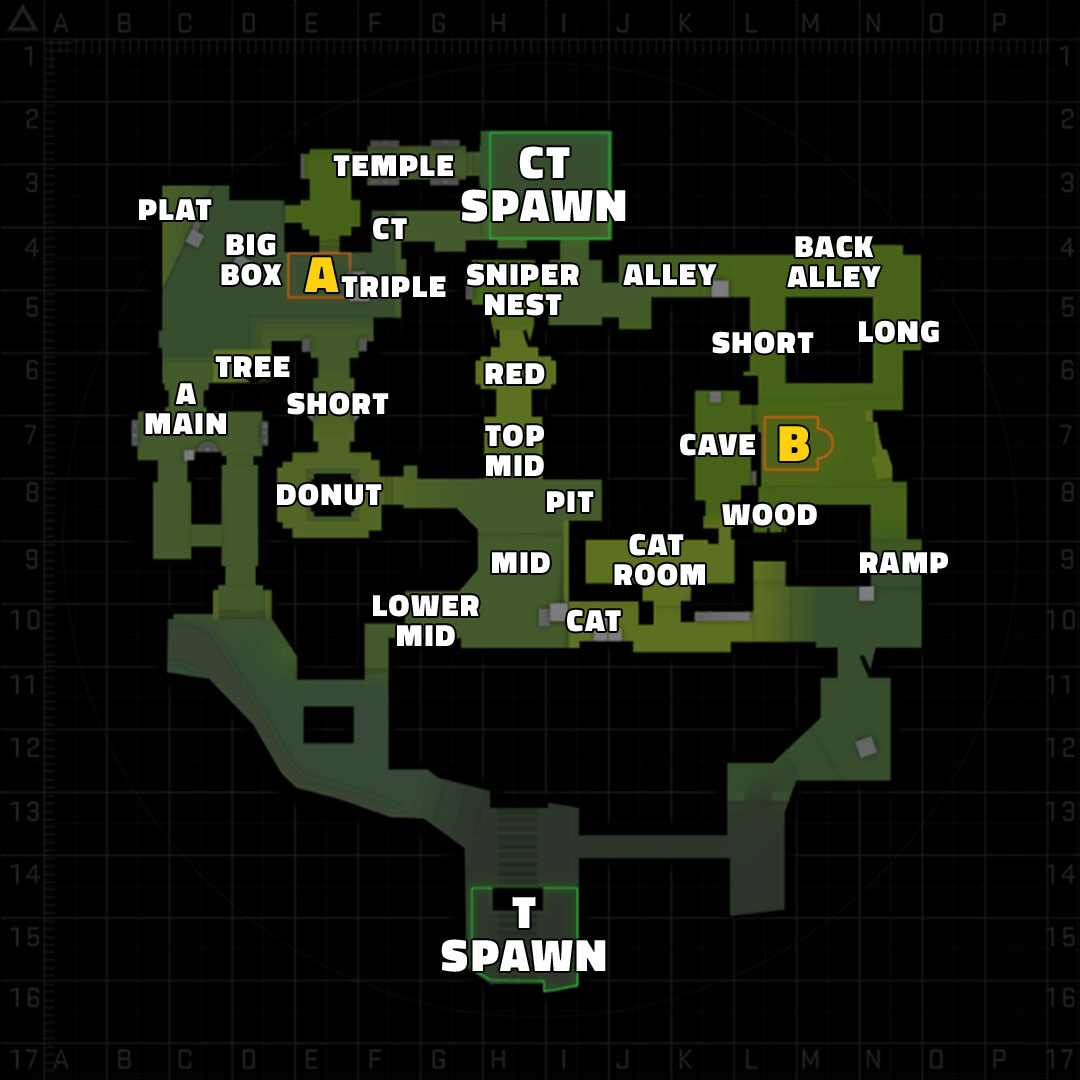
Mastering Common CSGO Callouts: Speak Like a Pro
In the fast-paced world of CSGO, communication is key to securing victory. Understanding common CSGO callouts can significantly improve your team's coordination and effectiveness during matches. Each map has its unique callouts, and familiarizing yourself with them is essential. For instance, on Dust II, knowing the key areas such as Long A, Catwalk, and Bombsite B can give you and your teammates a tactical advantage. By using these terms, you reduce confusion and help create a more fluid gameplay experience.
To further enhance your gameplay, it's important to practice these callouts often. You might consider making a callout guide or even utilizing online resources to memorize them effectively. Here are some common strategies:
- Join community discussions where experienced players share their insights on callouts.
- Watch tutorials or streams to see how pros utilize callouts in real-time.
- Practice with friends in custom games to reinforce your learning.
Counter-Strike is a highly popular first-person shooter game that pits teams against each other in various objective-based scenarios. Players can enhance their gaming experience by acquiring different skins, including Kostenlose CS2-Hüllen, which allow for personalization of their in-game weapons.
Understanding CSGO Map Callouts: A Language-Lover's Guide
Understanding CSGO map callouts is essential for any player who wishes to improve their tactical communication in the game. These callouts are the unique names assigned to specific locations on various maps, serving as a shorthand for players to relay information quickly. For example, on the map Dust II, locations like 'Long A', 'Mid', and 'B Site' are commonly used to inform teammates of enemy positions or strategic moves. Familiarizing oneself with these terms not only enhances gameplay but also fosters teamwork and collaboration within the squad.
In addition to basic callouts, many maps have intricate and detailed areas that require a deeper understanding. Many players often create a personal glossary of callouts to better communicate during matches. Learning these callouts can be just as complex as mastering the mechanics of the game. For instance, on Inferno, knowing that 'Banana' refers to the space between the two sites can drastically change your approach during a round. To get started, consider referring to resources such as maps with labeled callouts, which can serve as a great visual guide to cement this vital gameplay language.
Top 10 Essential Callouts Every CSGO Player Should Know
In the fast-paced world of CS:GO, communication is key to victory, and mastering essential callouts can significantly enhance your gameplay. Here are the top 10 essential callouts every CS:GO player should know:
- A Site: This refers to one of the main bomb sites found on maps like Dust II. Out calling this area efficiently can help your team position themselves correctly.
- B Site: Similar to A Site, this is critical for executing strategies and planning defenses.
- Mid: Central areas like Mid allow for quick rotations, making it imperative to communicate enemy positions effectively.
- Long: Observing and calling out enemy positions at Long can provide vital intel as it is a common approach route for attackers.
- Short: Another key attacking path that requires frequent monitoring and communication for any movement.
- Catwalk: Often abbreviated as “Cat,” knowing enemy placement here can help in anticipating their next moves.
- Site name “Heaven” or “Hell”: High and low vantage points increase tactical planning options, making them crucial in callouts.
- Back Site: Refers to the area behind the bomb site, significant for sneaky plays and strategic positioning.
- Connector: The passage linking sites can be a vital choke point; control it to gain a strategic advantage.
- Ramp: A common entry point needing constant vigilance for communication on enemy advances.