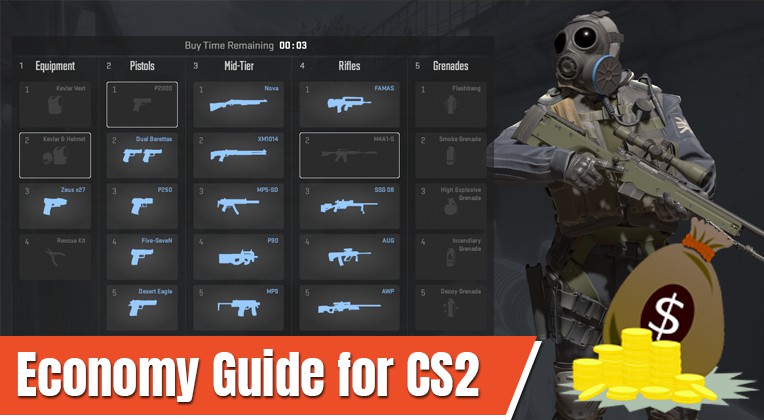
Understanding Save Rounds in CS2: Strategies for Success
In CS2, a popular competitive shooter game, understanding Save Rounds is crucial for embracing the game's strategic depth. A Save Round occurs when a team decides to forgo buying full weapons and armor to save money for an upcoming round where they can fully equip themselves. This often happens in scenarios where a team has lost consecutive rounds, resulting in a dwindling economy. By understanding when to implement a Save Round, teams can maintain their financial stability and gear up for more critical engagements. Key considerations include the timing of the save, the potential to win the next round with minimal investment, and communicating effectively with teammates to ensure everyone is on the same page.
Effective strategies for executing a Save Round can dramatically impact a team's trajectory in CS2. Firstly, it is essential to determine the right moment to save—typically, when your team cannot afford to buy effective weapons but has enough cash to set up for the next round's purchase. Here are several tips to maximize success:
- Coordinate with teammates: Ensure everyone understands the plan to avoid unnecessary spending.
- Use pistols wisely: Choose sidearms and throwables that offer the best chance to cause economic damage to the opposing team.
- Positioning: Utilize defensive spots to ambush enemies and potentially secure weapon pickups.
Counter-Strike is a popular first-person shooter game that focuses on team-based gameplay and strategy. Players can enhance their gaming experience by customizing various elements, including their crosshair. If you're interested in how to change crosshair in cs2, there are several methods and settings to explore that can improve your aim and overall performance.
Top 5 Tips for Mastering Save Rounds in Competitive Play
In the realm of competitive gaming, mastering save rounds can significantly impact your team's performance and overall strategy. Save rounds occur when players intentionally conserve their resources, opting to buy minimal equipment to maximize their economy for future rounds. To effectively execute a save round, consider the following tips:
- Communicate with Your Team: Always inform your teammates about the intention to save. Clear communication prevents confusion and allows everyone to align their strategies, ensuring a coordinated effort.
- Choose the Right Time: Identify situations where a save round is optimal, usually when your team is low on funds and the enemy has a clear advantage.
- Focus on Information Gathering: Use the save round to gather intel on enemy positions without risking heavy losses. This information can give your team a strategic advantage in subsequent rounds.
- Utilize Eco Strategies: Adopt strategies tailored for save rounds, like stacking at a single site or play aggressively to catch the opponent off-guard.
- Know When to Switch Plans: If the opportunity arises during the round, and your team secures an early kill or gains an advantage, adapt your strategy and consider a force buy.
The Importance of Save Rounds: When and How to Execute
In the realm of firearms training and operational readiness, save rounds are a critical concept that cannot be overlooked. These rounds, often set aside for specific training scenarios or quality control, serve a dual purpose: they ensure that shooters maintain their proficiency and provide a safety net during live-fire exercises. Understanding when to utilize save rounds is essential for effective training. Factors such as the complexity of the training exercise, the skill level of the participants, and the specific objectives of the training session must be taken into account to maximize their benefit.
To effectively execute save rounds, it involves a few key steps that every responsible shooter should follow. First, it's important to establish a clear plan that outlines the training goals and the conditions under which save rounds will be used. Next, incorporate save rounds into dry fire or live fire training sessions, ensuring that all participants are aware of the purpose and safety measures associated with their use. Lastly, review and evaluate the outcomes of each training session to continuously improve the application of save rounds and enhance overall marksmanship skills.